After visiting the Global Seed Vault on Svalbard, our tour guide took us on a “leisurely evening stroll” to the summit of Blomsterdalen. But it wasn’t quite as leisurely as expected…
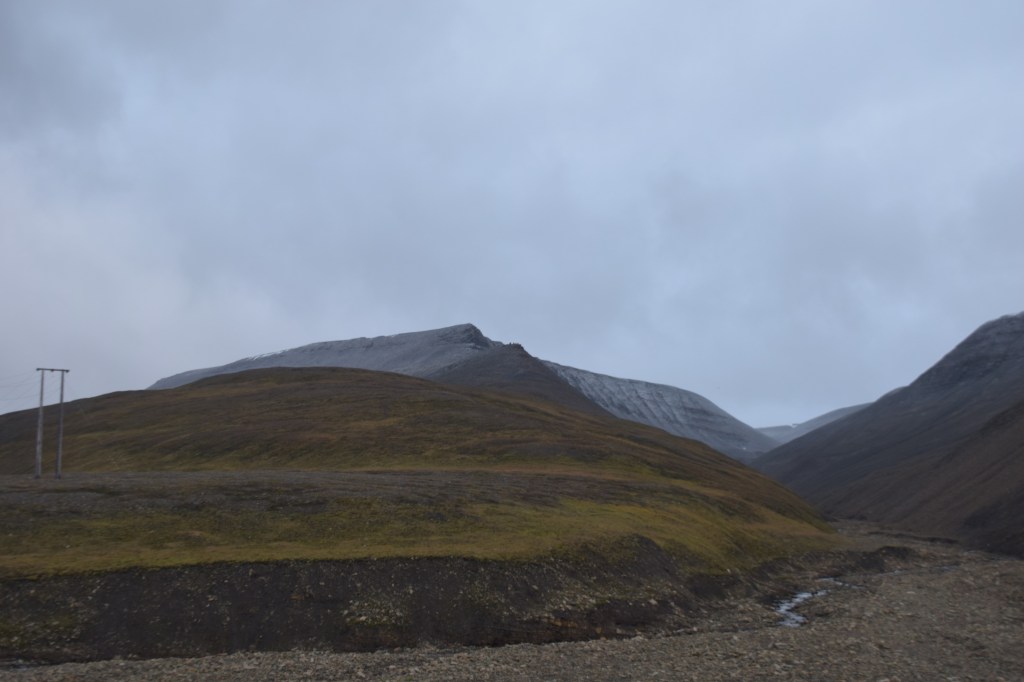
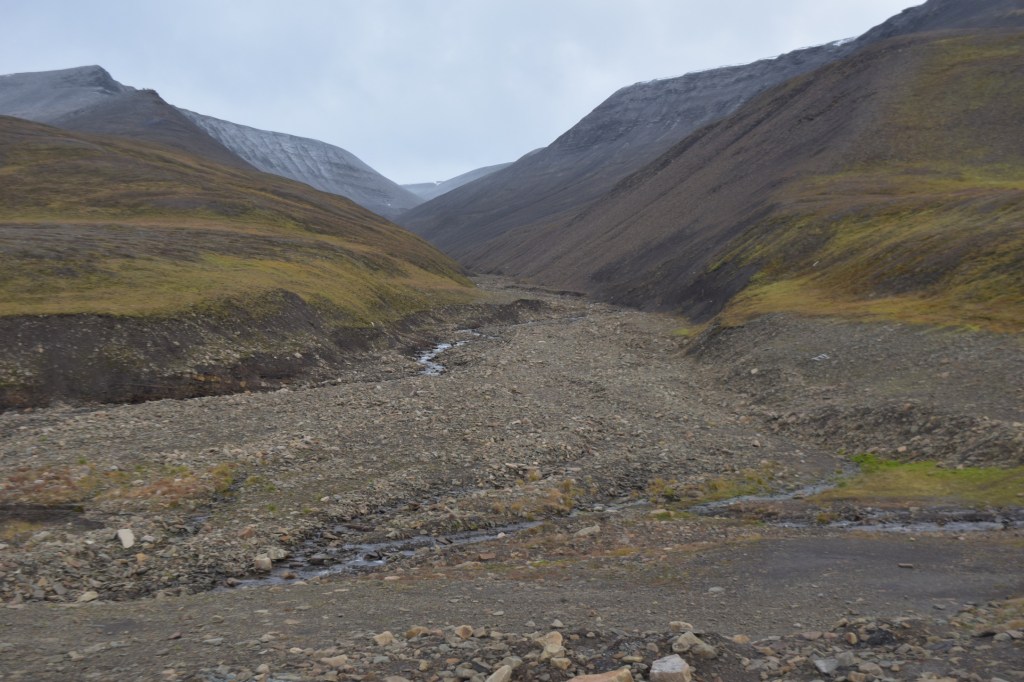
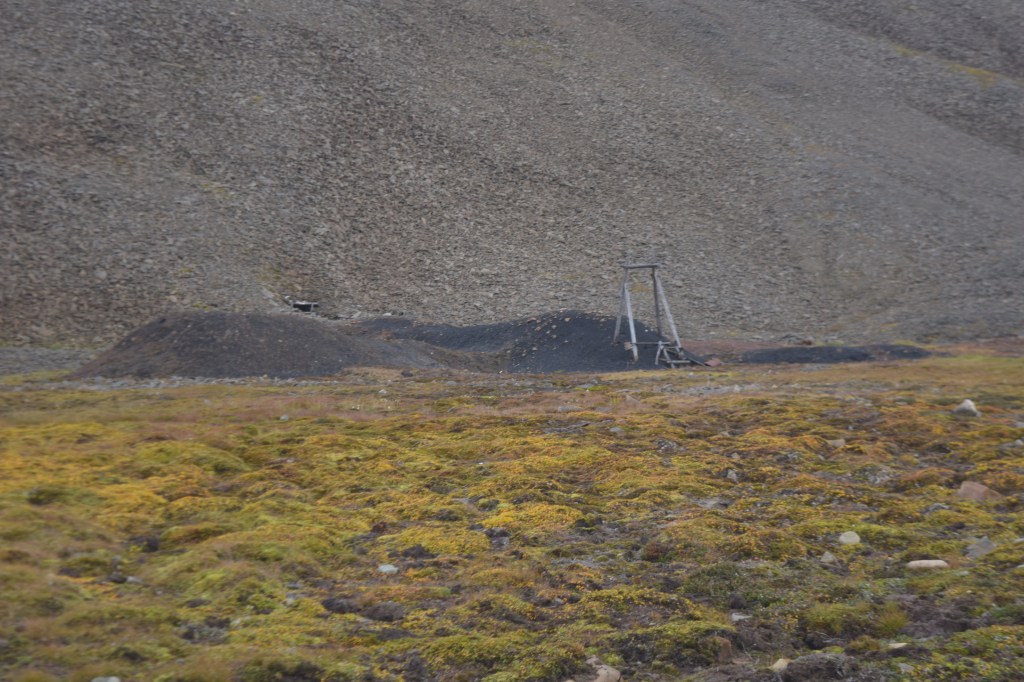
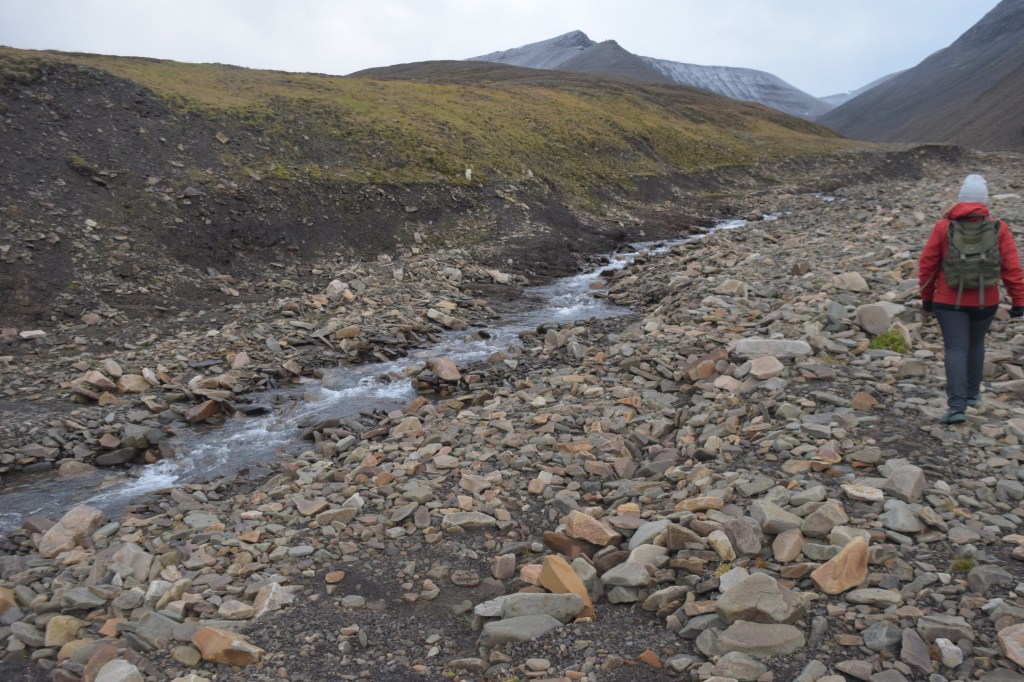
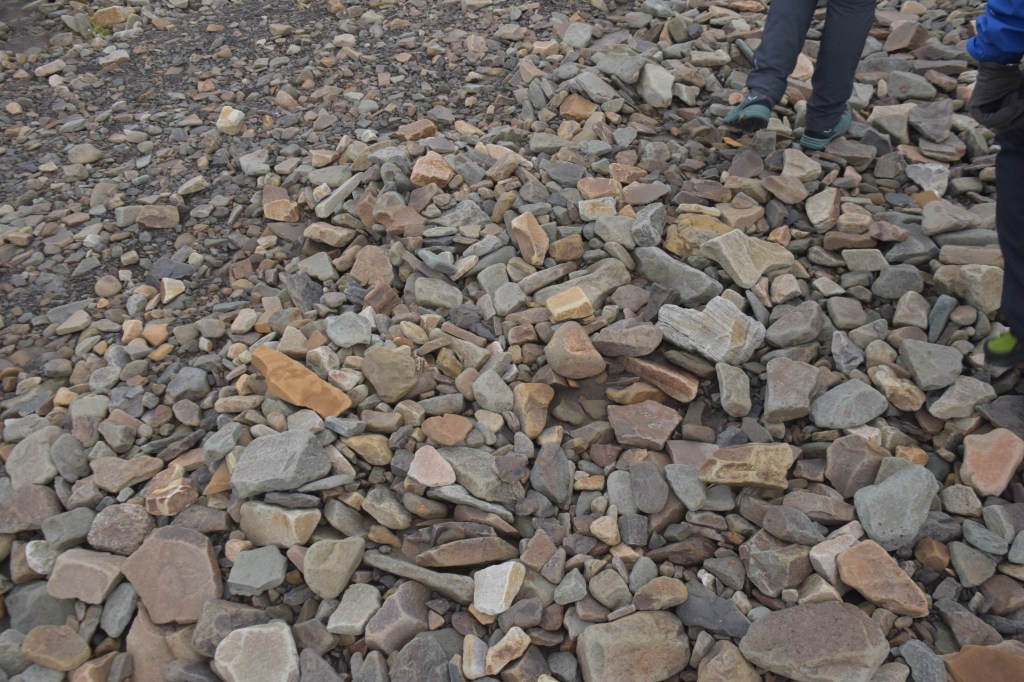
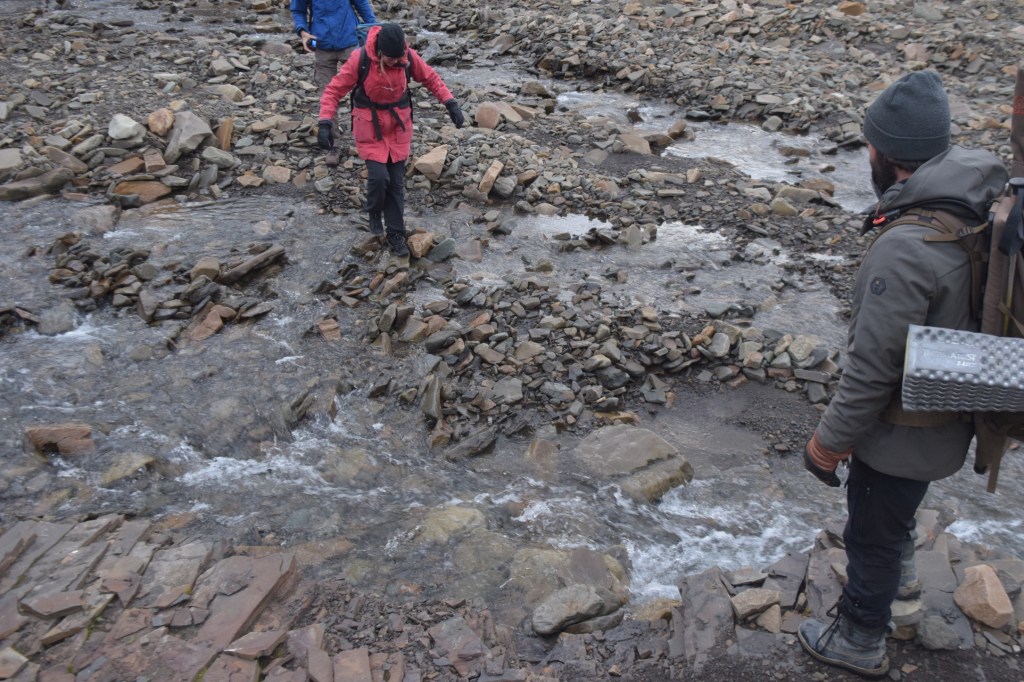
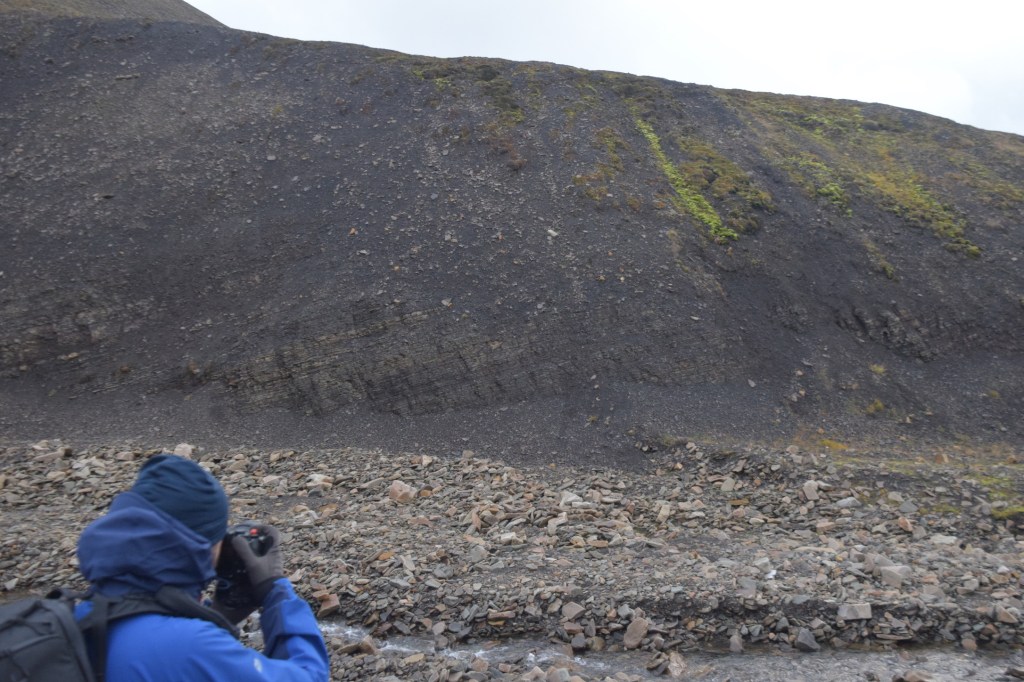
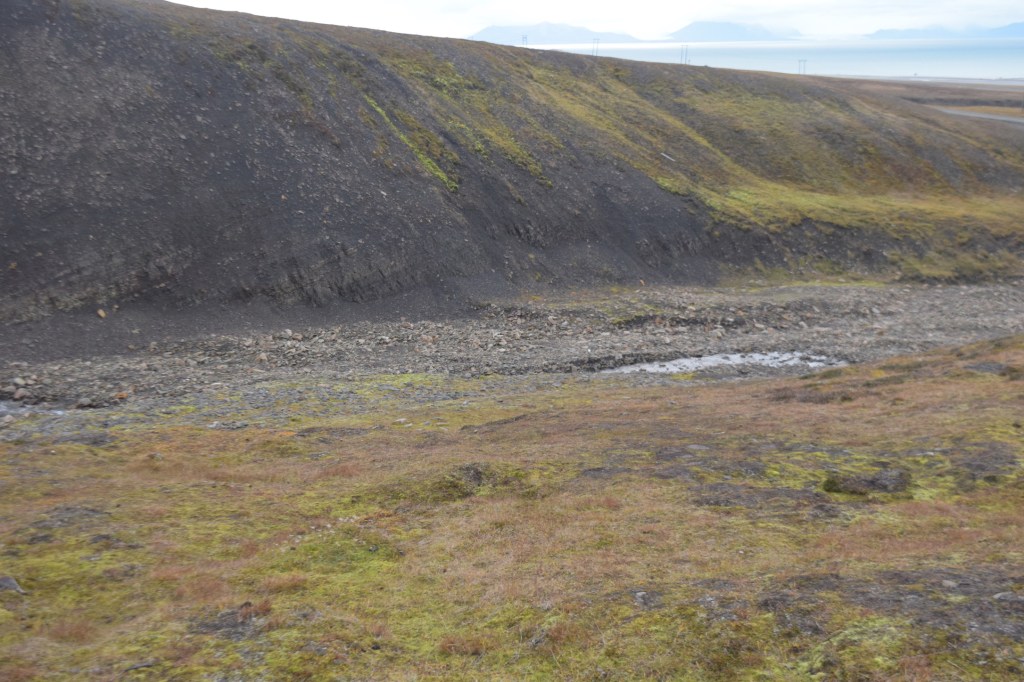
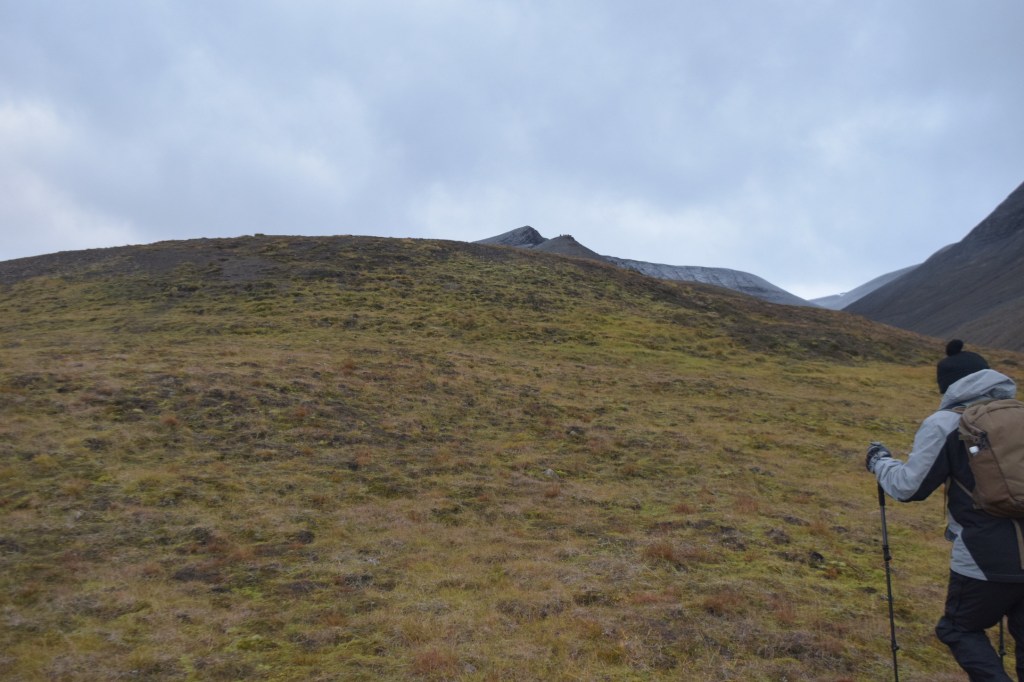
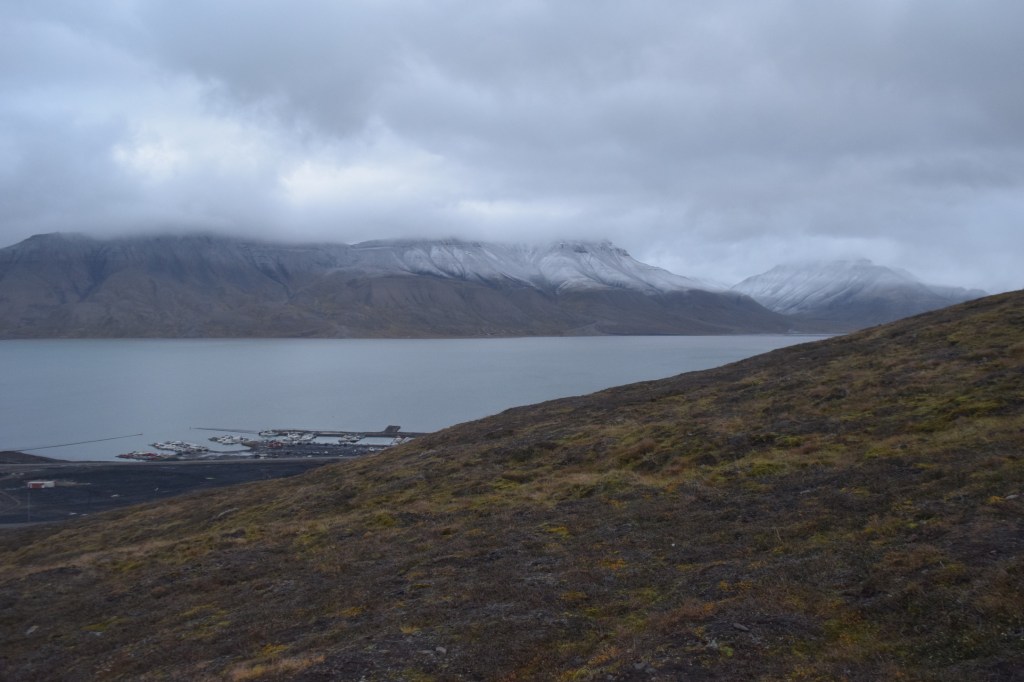
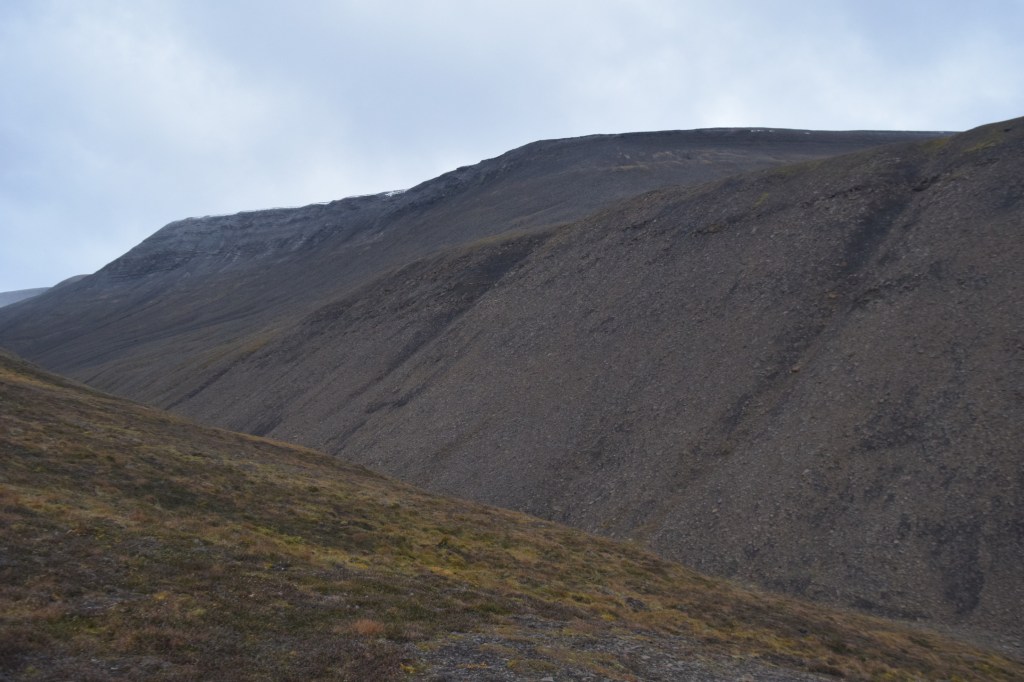
We were headed for the little peak just to the right of the bigger peak. Don’t let the perspective fool you, it was a good hike. 320 meters (about 1000 feet) above where this picture was taken.Starting in a mostly dry snow runoff creek.Passed some coal beds/old mine shafts along the way to the hill and on the way up. Svalbard, before becoming the launchpad for the North Pole expeditions in the early 20th century, and shifting to tourism in the later 20th century, was originally known for coal mining. The Svalbard Treaty from 1920 recognizes it as Norwegian territory, but any signatory of the treaty has the right to set up communities/mining/research there, and you don’t need a visa to live or work on Svalbard! (Unless you get there on a boat from somewhere else, you still need permission to enter the EU, at least as a tourist, to get there, though.)Apparently this is a bit more active in spring/early summer, when the snow starts to melt off the hills.Rocks like these would prove a bit more scary later on.First real test of my cheap $25 “winter waterproof fur-lined hiking boots” that I bought from a no-name brand in China before my trip (they literally just said “Outdoor” on the shoe). Surprisingly, they did pretty well throughout the whole trip. The sole was a bit thin, but the fur kept my feet warm and dry, and it was pretty well-sealed against water/snow.More coal beds. According to our guide, Svalbard was in the tropics millions and millions of years ago and was covered in forest; hence the coal (which comes from ancient wood).Climbed this hill to get over the creed bed..And kept climbing. Perspective is a little more noticeable now. The ground was very spongy, as it’s permafrost but it wasn’t frozen that day (just over 1 C / 35 F at the time).Already quite a bit above sea level (the Seed Vault is about half a kilometer to the left, and you can see the port here, which is between the airport and the “town” of Longyearbyen (about 4 km between airport/town).
The hillllllls are aliiiivee…. with the…. *ahem* sorry.
At this point, after cresting a small rise, we came upon a dead reindeer. The Svalbard reindeer is a bit smaller than continental reindeer, and they are everywhere on the islands. I won’t put the pictures on this page directly for sensitive viewers, but if you really want to see it, I’ve uploaded a picture from far away and one more closeup. (Trigger warning: dead animal.) The guide said it was very recent, as he was on the same hill the day before. It didn’t look like a polar bear kill, but it also didn’t seem to be the work of hunters, because a) they aren’t authorized to hunt in this particular area, and b) they would have taken the antlers/prize with them.
He took a lot of pictures of it and sent them to the Governor of Svalbard – one of the only government officials on the island, who is responsible for almost everything, including:
Rifle licensing (you need one to leave the town of Longyearbyen)
Snowmobile licenses (not this season, unfortunately)
Alcohol limits (apparently there’s a limit on how much alcohol an individual can purchase while living on the island?)
Administering the islands’ budget – with the Svalbard Treaty, residents do not pay Norwegian income/social tax, but are also not on the Norwegian social welfare system. They pay a flat 8% (according to the guide), all of which stays on Svalbard and is used for social services there.
Deporting people – If you can’t support yourself in Svalbard financially, you gone – bye bye. No social safety net there – it’s just not possible. There was an urban legend going around that it’s “illegal to die” on Svalbard, but that’s taking it a bit out of context – you simply can’t bury people on Svalbard because it’s all permafrost – the bodies don’t decompose, which can be dangerous biologically. Some scientists actually found bodies still perfectly frozen with samples of the infamous Spanish flu from the 1910s which killed tens of millions of people. Joy.
Okay, that was fun and bright. Back to the hike.
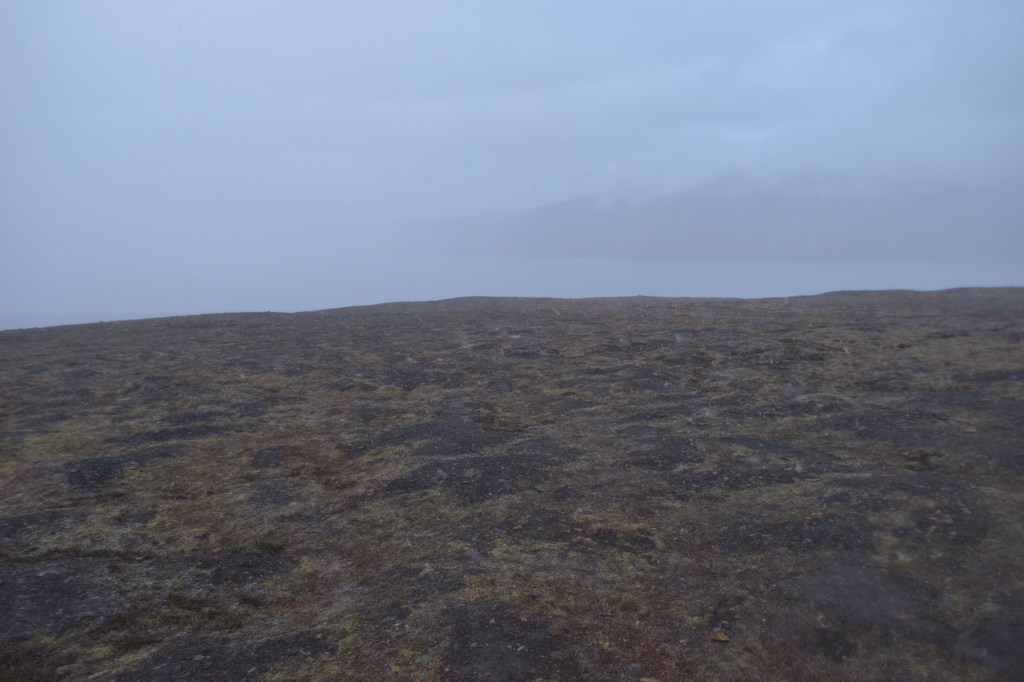
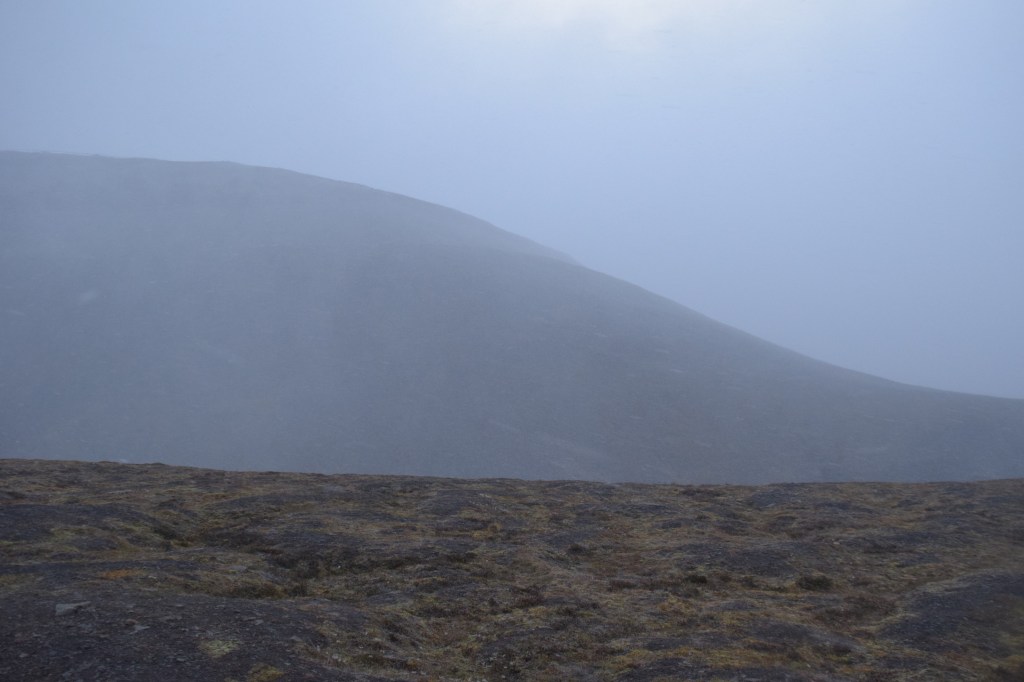
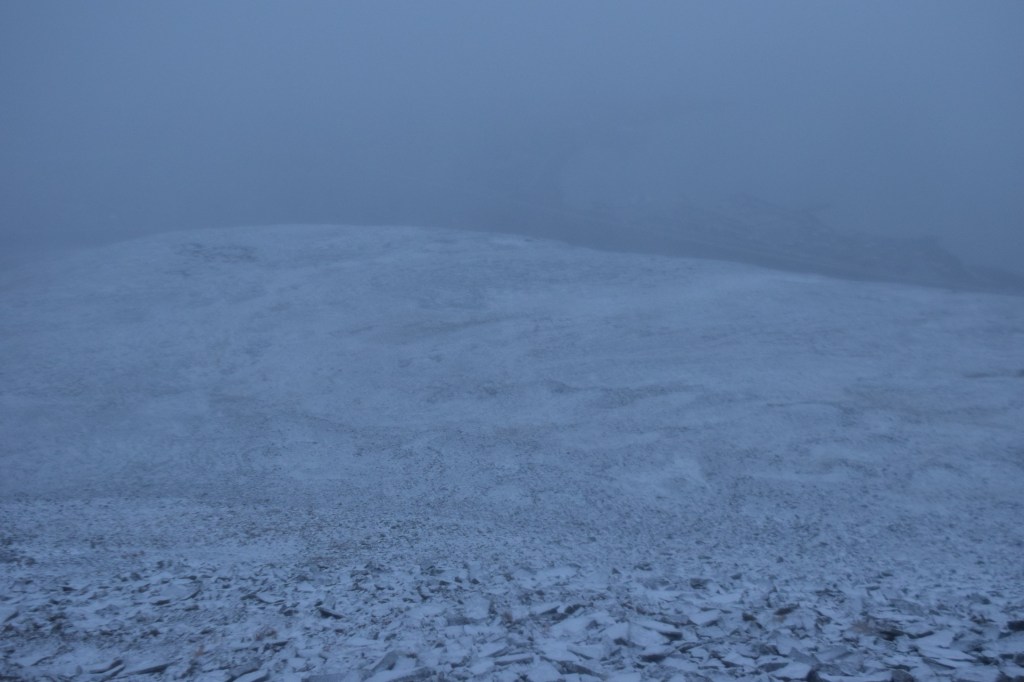
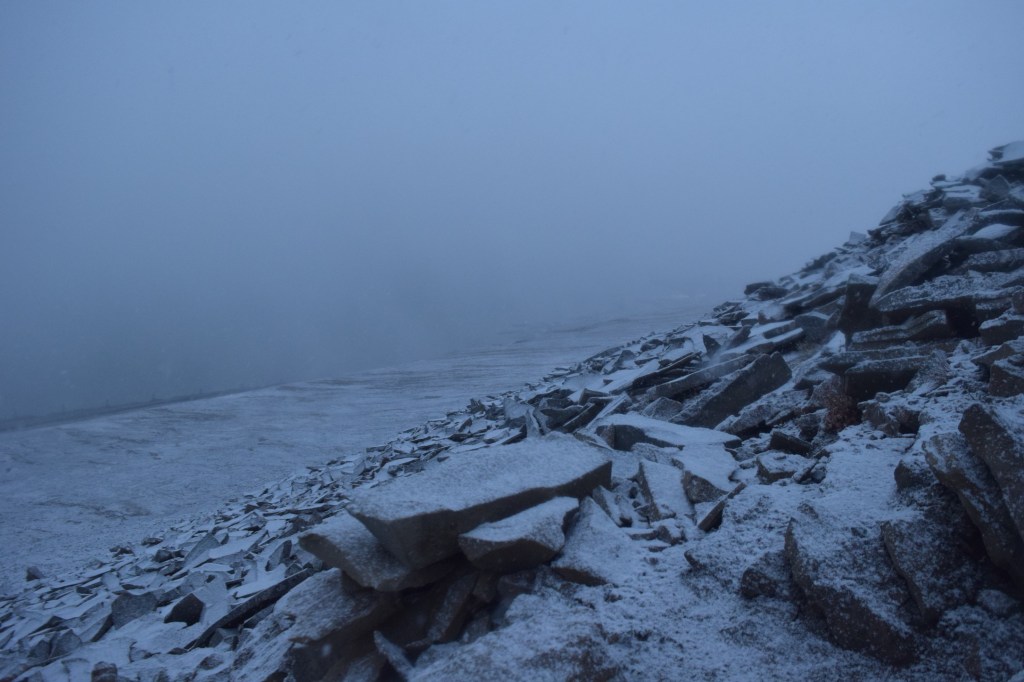
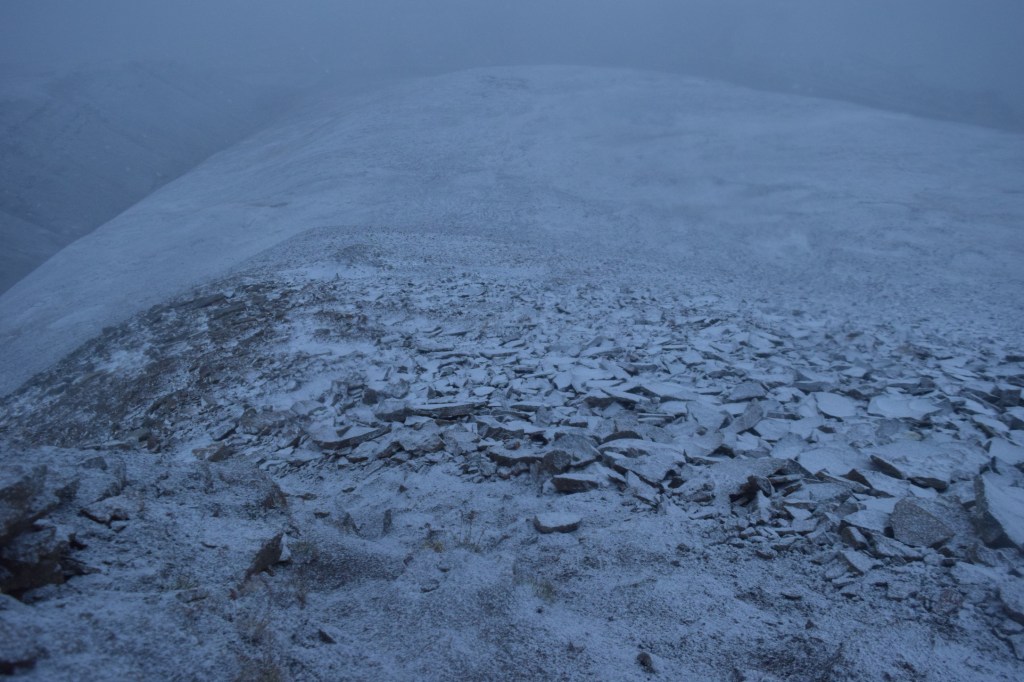
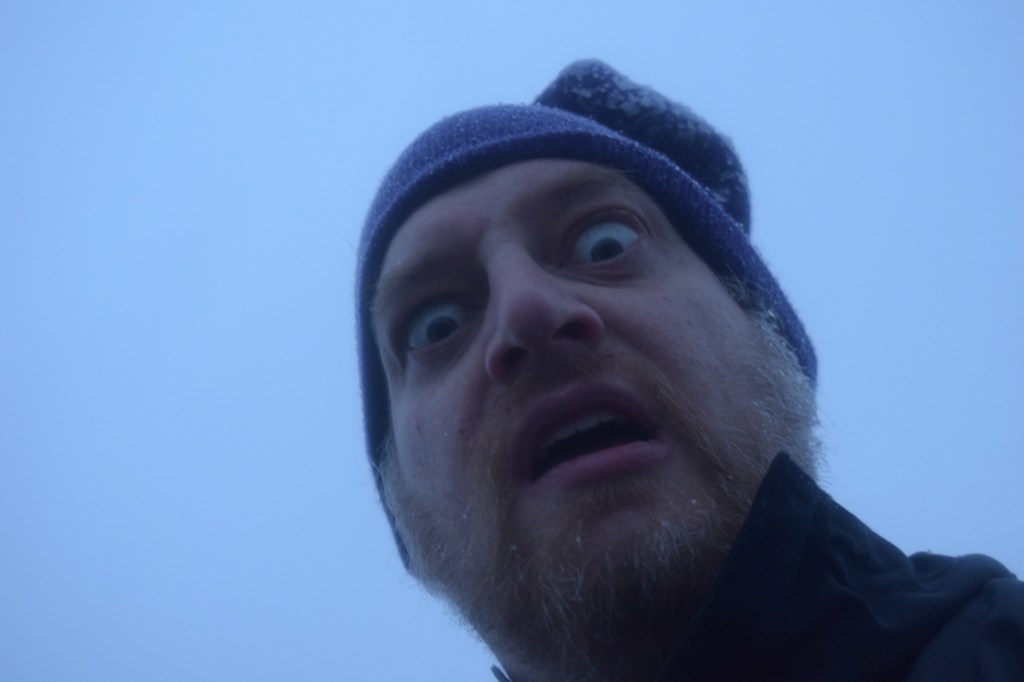
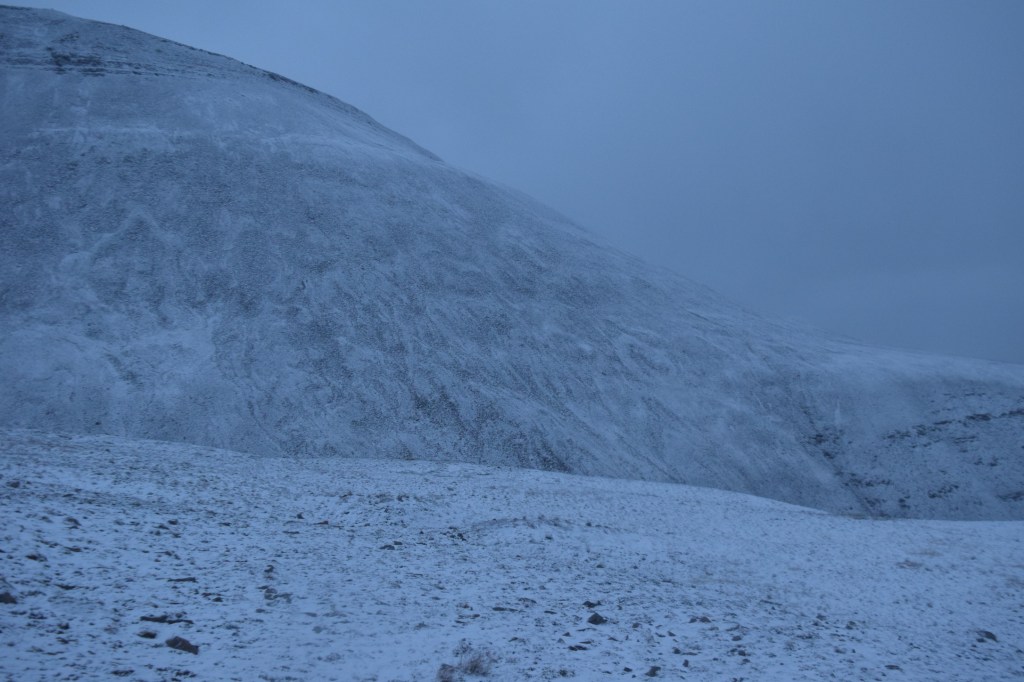
Started to get a bit foggy as we crested the next rise and started getting to the more rocky area closer to the summit. No big deal, right? *foreboding barbarian-esque music here*I was pretty tired at this point (I can walk looooong flat distances with no problem – I’ll eventually post my day of walking 36 km around Honolulu – but vertical climbs are exhausting for me). Was still a little foggy, but then… Things shifted. Within literally 20 minutes (you can check the timestamp metadata on the photos!!) it went from this….To this. You can see that the ground also has started to shift from the permafrost to loose rocks. Not the best place to be for a first coating of snow. Deep winter, that’s different, as you’ve likely got 3-4 ft of snow between you and the ground and you’ve got snowshoes.Beautiful, no doubt, but I started wondering how we would get up (and then back down!!).Remember the perspective problem from before? Keep in mind, what you see as the wide field there is about 100-150 meters below me, and that slope of rocks is a lot steeper than it looks.And we were still going up.Slightly better perspective.And here I am questioning my decisions in life (and checking my lens).
At this point, we were about 30-40 meters from the summit, but it was quite steep, and was getting quite windy and more wet. I and another stayed in a little hollow (old abandoned mine exploration tunnel) while the others went to the top (just to say they did? There was no visibility by this point). They then re-gathered at the hollow, we had some warm mulled wine the guide had brought, rested for a few minutes and then started our way down.
I didn’t take pictures for most of this because I was focused on staying upright. A very tall person with a bad center of gravity on steep rocks going down on a snowy hill.. let’s just say my concentration was laser-focused on one step at a time.
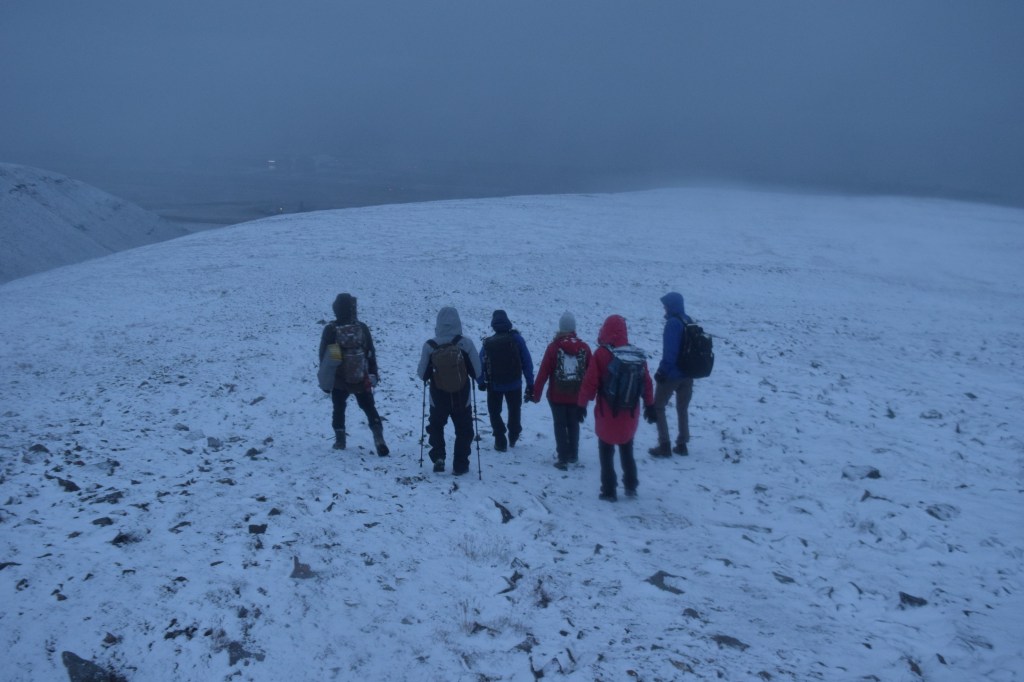
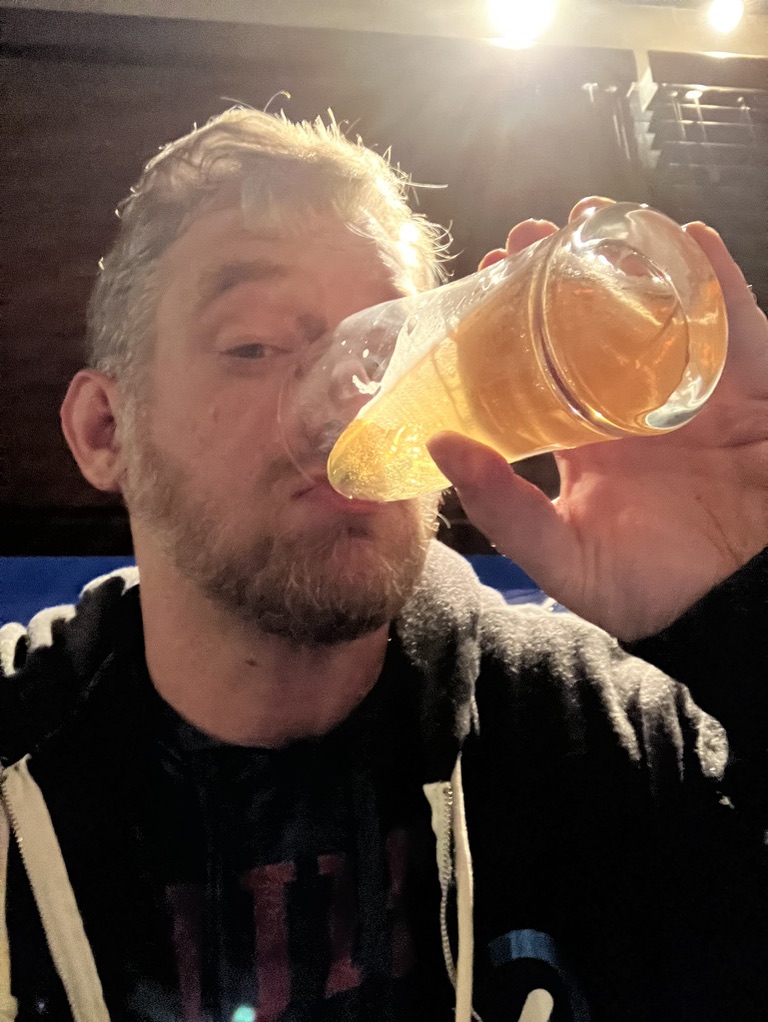
We finally made it down to the plateau from before (though more climbing down was involved, it was much less heart-racing than the rocks at the top).Once I could stop and actually enjoy the view, it really was gorgeous.A regular Polar Explorer (not really, but was still a really wild adventure for me). I do still want to go back in the winter, where it’s dark all day long and you can ride snowmobiles through the valleys. At -40 degrees (both C and F) though, I *might* need some better clothes next time.Back to the hotel, where I had a hot shower, a beer, and uploaded a previous version of this story to the Book de Face. This was the night I had the first inspiration to do this blog, so I could have control over my pages. Yay! On the next day, I woke up early for an all-day boat trip to an abandoned Soviet mining town.. the fabled Pyramiden.





 SSS Method
Leave a comment